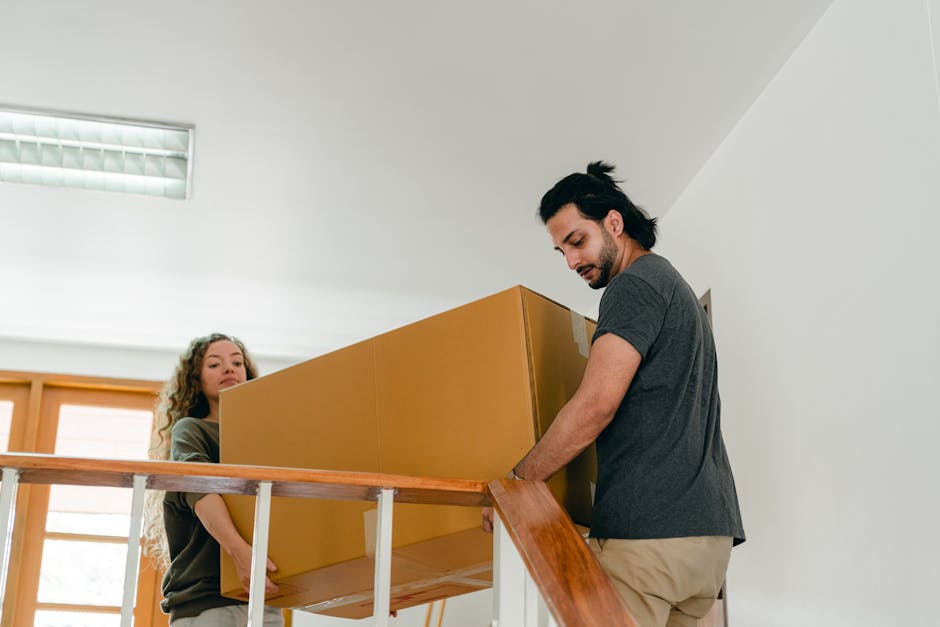
Camden removals insider tips for narrow stair moves

If you are moving in Camden, there is a good chance the real problem is not the distance between homes. It is the staircase. Tight turns, awkward landings, narrow Victorian rails, basement flats, top-floor walk-ups, and that one banister that seems to stick out by exactly the wrong amount. Truth be told, Camden removals for narrow stair moves need a different mindset from an ordinary house move.
This guide gives you practical, field-tested advice for planning and managing those tricky stair carries without drama. You will learn how narrow stair moves work, why they go wrong, what to do before the van arrives, and how to make the move safer for your furniture, your walls, and your back. We will also cover common mistakes, useful tools, and a realistic checklist you can actually use on moving day.
And yes, the little details matter. A couple of centimetres, a better angle, a shorter route from front door to stairwell - suddenly the whole move feels calmer. Who wants to discover on the landing, with a wardrobe half-tilted and everyone holding their breath, that the plan was never going to fit? Not you, ideally.
- Why narrow stair moves matter in Camden
- How narrow stair removals work in practice
- Key benefits of planning properly
- Who needs this advice most
- Step-by-step guidance
- Expert tips for smoother carrying
- Common mistakes to avoid
- Tools, resources and recommendations
- Law, compliance and best practice
- Options and comparison table
- Real-world example
- Practical checklist
- Conclusion
- Frequently asked questions
Why Camden removals insider tips for narrow stair moves Matters
Camden has a lot of character, and some of that character shows up in the stairs. Many properties in the area were not designed with modern sofas, king-size mattresses, or chunky wardrobes in mind. If you have ever tried to pivot a cabinet around a sharp stair bend while someone else is balancing at the top step, you already know the problem. The space disappears fast.
That is why local knowledge matters. In narrow stair moves, the hidden risks are not just inconvenience. They are scratched walls, chipped plaster, trapped furniture, strained shoulders, and delays that snowball across the day. A move that should feel organised can turn into a slow, stressful puzzle if the route is not checked properly in advance.
In Camden especially, you may also deal with controlled parking, busy streets, shared entrances, older staircases, and neighbours who are trying to get past at exactly the wrong moment. Small things become big things. A polite knock to hold the hall clear, a blanket taped over a sharp corner, or moving a sofa at 8 a.m. instead of lunchtime can make a huge difference.
Expert takeaway: narrow stair moves are won before anyone lifts a thing. Measure, clear, protect, and decide the order of loading before the first box leaves the flat.
How Camden removals insider tips for narrow stair moves Works
A narrow stair move is basically a controlled problem-solving exercise. The crew is trying to get each item from one floor to another with the least possible contact, twisting, or dead weight. On paper that sounds simple. In real life, the geometry can be awkward. Furniture has corners, staircases have curves, and walls, to be fair, do not move out of the way.
The process usually starts with a look at access. That means checking the width of the stairwell, the height of the turns, where the bannister sits, how much room there is at the landing, and whether the item can be carried upright, sideways, or must be dismantled. A good plan also considers the route outside the property: front path, kerb space, parking position, and the distance from van to doorway.
Then comes item preparation. Good removals teams often use blankets, straps, gloves, trolleys where suitable, and protective wrap for delicate surfaces. Larger pieces may need partial dismantling. A bed frame might come apart quickly; a wardrobe may need doors and shelves removed first. That small bit of prep saves a lot of shuffling later.
Finally, the loading sequence matters. In narrow stair moves, the most awkward or heaviest items usually go first, while everyone is still fresh and the stairwell is clear. Boxes are then moved in a sensible flow rather than in a random pile. This sounds obvious, but moving day has a funny habit of making obvious things vanish from memory.
If you are comparing moving support options, it can help to look at broader services too, such as removal services or a more flexible man and van approach for smaller loads. For home-focused moves, the site's home moves page is also useful context.
Key Benefits and Practical Advantages
There are a few clear benefits to approaching a Camden stair move properly, and they are not just about saving time.
- Less risk of damage. Careful planning reduces the chance of wall scuffs, broken handles, bent frames, and cracked mirrors.
- Better safety for everyone. Narrow stairs are not the place for rushed lifting or awkward carrying angles.
- Faster completion. A move that is mapped out in advance usually runs more smoothly, even if the staircase looks intimidating at first glance.
- Lower stress. When the route, packing, and lift order are settled, the day feels more manageable.
- Better use of labour. If you need a team for a couple of awkward items, precise planning can be more efficient than overbooking or underpreparing.
There is also a commercial benefit if you are comparing quotes. A removal company that understands awkward access can often price more accurately after a proper access check. That means fewer surprises later. You may still need a little flexibility, but at least you are not guessing in the dark.
And there is something else, often overlooked: confidence. When everyone knows the plan, the staircase stops feeling like a monster. It just becomes a route to manage. That change in attitude helps more than people expect.
Who This Is For and When It Makes Sense
This advice is especially useful if you live in a Camden flat, maisonette, terraced house, or converted building with compact internal access. It is also a strong fit if you are moving into or out of upper-floor accommodation where lifts are unavailable or too small to be useful.
You will probably benefit most if you are dealing with one or more of these situations:
- Victorian or period staircases with tight turns
- Basement or top-floor flats with narrow access
- Bulky furniture such as sofas, wardrobes, beds, and bookcases
- Shared entrances where timing and consideration matter
- Moves involving limited parking or a long carry from van to door
- Moves where you are trying to avoid damage deposits becoming a problem
If your move is small and the furniture breaks down easily, a flexible service can be enough. If you have several large items, valuable pieces, or very limited stair space, a more structured plan is usually the safer choice. That may mean a larger team, extra padding, or a route that avoids the worst pinch points.
Camden also attracts a mix of renters, first-time buyers, sharers, and professionals moving on a tight timetable. If that is you, then speed matters, but not at the expense of careful handling. One delayed lift because a sofa got stuck on a landing can throw the whole day off. And nobody likes that feeling of everyone standing there in silence, pretending the angle will magically improve.
Step-by-Step Guidance
Here is a practical way to approach narrow stair removals in Camden without turning the move into a full-scale event.
- Measure the awkward bits first. Do not just measure the room. Measure the stair width, landing space, door clearances, and the longest item you need to move. A tape measure and a quick photo are often enough to catch the obvious issues.
- Identify problem items. Mark the things most likely to catch: large sofas, glass tables, bed bases, wardrobes, and appliances. These are the items that decide the mood of the day.
- Decide what should be dismantled. If a piece can come apart safely, it often should. Remove legs, shelves, doors, and anything that makes the item wider or less stable.
- Clear the route completely. Hallways, landings, door mats, bicycles, shoe racks, loose cables, and laundry baskets all become hazards. It takes minutes to move them and saves a surprising amount of faff.
- Protect walls and corners. Use blankets, corner guards, or cardboard where needed. Even a small buffer helps if a hand slips or an elbow swings wide.
- Plan the carrying order. Move the hardest items while everyone is fresh. Keep boxes grouped by room so you are not zig-zagging up and down stairs for no reason.
- Use the right lifting technique. Bend at the knees, keep the load close where possible, and communicate clearly. Short instructions work better than long ones.
- Check before every turn. A "stop, rotate, lift" rhythm is better than charging ahead. A tiny pause on the landing can prevent a lot of damage.
- Load the van with the access point in mind. Put the biggest items where they are easiest to reach at delivery. Good loading order saves time at the other end too.
A practical note: if you have not moved furniture through a Camden stairwell before, do a mock path first. Walk the route with the item's dimensions in mind. You will often spot the tightest corner before it becomes a live problem. That is the kind of boring little win that keeps the whole day calm.
Expert Tips for Better Results
These are the kind of details that tend to separate a smooth move from a messy one.
1. Pad for the turn, not just the straight run
Most people protect the obvious flat walls and forget the turning point. But the landing is often the danger zone, because that is where furniture twists. Add extra protection there first.
2. Remove the "just one more thing" clutter
If a stairwell has coat hooks, baskets, umbrellas, or a stack of deliveries near the bottom step, move them. One stray object can change the carrying angle just enough to create contact. It sounds tiny. It isn't.
3. Use smaller boxes than you think you need
In narrow stair moves, smaller boxes are often better than heroic oversized ones. Heavy small boxes are easier to manage than awkward giant ones that block sight lines. There is no prize for overpacking.
4. Keep one person focused on the staircase
On tricky moves, having one person watch the top and bottom of the stairwell can help avoid collisions and poor timing. It is a simple role, but incredibly useful.
5. Treat the weather as part of the plan
A damp Camden morning can make steps a little slick, especially around older entrances. A quick wipe-down and decent footwear are not glamorous, but they matter. If the day starts grey and cold, expect surfaces to be less forgiving.
6. Ask for an access review before the quote is final
If a company offers a route check or asks for photos of the staircase, that is usually a good sign. It means they are thinking beyond the front page of the move. A bit of detail early on can save a lot later.
If you need support with packing before the move, a service like packing and unpacking services can be a smart way to reduce stair-time stress. And for items that are too bulky or awkward to keep, furniture pick up may help you simplify the load before moving day arrives.
Common Mistakes to Avoid
Most stair move problems are not dramatic disasters. They are small avoidable mistakes that stack up. Here are the ones we see most often.
- Skipping measurements. Guessing is not a plan. A sofa that "looks like it will fit" often does not.
- Leaving packing until late. Sloppy packing means more loose items, more trips, and more pressure on stair carries.
- Ignoring the landing. The tightest point is often the turn, not the staircase itself.
- Trying to carry too much at once. This is how balance goes out the window.
- Not checking disassembly options. A removed door or leg can change everything.
- Forgetting to protect the building. A few minutes of protection can save awkward conversations later.
- Assuming the van position does not matter. The extra few metres from kerb to door can be a bigger issue than expected.
One of the bigger hidden mistakes is emotional, oddly enough: people sometimes rush because they feel guilty about taking time. Don't. A careful pause at the landing is not a failure. It is what good moving looks like in a narrow stairwell.
Another common one? Saying "we'll just tilt it a bit" every five minutes. I've said it too. Usually right before discovering why the tilt was never the answer.
Tools, Resources and Recommendations
You do not need a van full of specialist kit for every move, but the right basics make a real difference in Camden stair moves.
| Tool or item | Why it helps | Best used for |
|---|---|---|
| Furniture blankets | Protects edges, paintwork, and delicate surfaces | Sofas, wardrobes, tables, stair corners |
| Straps | Improves control and stability while lifting | Heavy or awkward items |
| Gloves with grip | Helps hold slippery or bulky items | Boxes, furniture, mixed loads |
| Corner protectors | Reduces wall and paint damage | Landings, narrow turns, door frames |
| Clear storage bags or labels | Speeds up unpacking and keeps small items together | Hardware, cables, fixings, room-specific packs |
| Basic tool kit | Helps dismantle and reassemble furniture safely | Beds, wardrobes, shelving, cabinets |
For larger home relocations, browsing broader options such as house removals or removals can help you understand how much support you actually need. If your move is smaller or more flexible, a removals van setup may be enough. The right choice depends less on the label and more on the access.
It also helps to keep digital resources simple. Take photos of each staircase, the landings, any tight door frames, and the largest items. You can send those quickly when requesting a quote or comparing options. It saves long explanations and reduces guesswork.
Law, Compliance, Standards, or Best Practice
For most domestic moves, the key compliance concerns are practical rather than legal heavyweights. Safe lifting, sensible access planning, careful parking, and respect for building rules all matter. If you live in a managed block, check any move-out or move-in conditions set by the landlord, building manager, or residents' association. They may require booking a lift, protecting communal areas, or keeping to set time windows.
Health and safety best practice is straightforward: do not lift beyond what is manageable, avoid twisting under load, keep walkways clear, and communicate before changing direction. If the item is too heavy or awkward for one person, it should be treated that way. No heroics needed.
From a property perspective, a careful removals team should also respect shared hallways, fire exits, and common parts. In older Camden buildings, hallways can be tight enough that one misplaced box becomes everyone's problem. A polite, methodical approach is not just good manners; it is basic best practice.
If you are comparing providers, the company's insurance and safety information is worth checking, as is the general approach described on their health and safety policy page. For pricing clarity, their pricing and quotes information can help set expectations before you book.
Options, Methods, or Comparison Table
There is no single right way to handle a narrow stair move in Camden. The best method depends on access, furniture size, and how much time you have.
| Method | Best for | Pros | Trade-offs |
|---|---|---|---|
| Full removal team | Larger homes or many bulky items | More hands, better control, usually faster on awkward access | Higher cost than small-load options |
| Man and van | Smaller homes, lighter loads, flexible schedules | Often adaptable and efficient for compact moves | May need more client prep for very awkward furniture |
| Item dismantling first | Wardrobes, beds, shelving, some tables | Reduces width and weight, easier around turns | Takes planning, tools, and some reassembly later |
| Staged carry | Very tight stairs and shared access | Safer pacing, less congestion | Takes longer and needs coordination |
| Declutter and reduce volume | Anyone with surplus furniture or boxes | Cheaper, easier, less stair stress | Requires decisions before moving day |
For many Camden flats, the most efficient route is a combination of methods: declutter first, dismantle where sensible, then use a flexible carrying plan. That sounds boring. It is boring. And boring is good here.
Case Study or Real-World Example
Picture a two-bedroom Camden flat with a narrow internal staircase and a landing turn that narrows just enough to make a sofa awkward. The biggest issue is not the distance to the van. It is getting the sofa from the living room to the front door without scraping the wall or wedging it across the stairwell.
In a move like this, the first useful step is to clear the route completely and take measurements of the sofa's longest edge, the stair width, and the landing. The second step is to remove the sofa feet if possible and wrap the corners. That tiny change can make the difference between a clean pivot and a blocked landing.
In practice, the crew might carry the sofa nose-up, rotate on the landing, then tilt slightly to clear the banister. Not wildly. Just enough. Meanwhile, a second person watches the rear edge and calls out the wall clearance. The whole move can feel slow for thirty seconds, then suddenly it is done.
That is usually how narrow stair moves go. The right preparation makes the difficult bit look almost easy from the outside. Almost. The people doing the lifting know better.
We have seen the same pattern with wardrobes, mattress bases, and even large framed mirrors. The successful jobs are rarely the ones where the item is "forced through." They are the ones where the team plans the angle, strips back anything removable, and gives the staircase a little respect.
Practical Checklist
Use this before moving day. If you can tick most of it off, you are in good shape.
- Measure the furniture and the staircase
- Photograph the tightest turns and landings
- Confirm whether items can be dismantled
- Clear hallways, doorways, and stairwells
- Protect corners, walls, and bannisters
- Group boxes by room and priority
- Label fragile or awkward items clearly
- Check parking and access near the property
- Set aside tools, tape, and wrapping materials
- Keep water and basic supplies available for the day
- Brief everyone on the route and lift order
- Leave a little buffer time for stairs that are tighter than expected
Quick reminder: if an item feels borderline on paper, treat it as borderline in real life. Narrow stairs have a way of making "probably fine" into "actually, no."
Get a free quote today and see how much you can save.
Conclusion
Camden removals for narrow stair moves are all about preparation, patience, and the right method for the building in front of you. Measure early, simplify your load, protect the route, and do not underestimate how much difference a careful plan makes. A move with tight stairs can still be straightforward if the access is respected from the beginning.
If you are weighing up options, start with the items that are hardest to carry and the spaces that are hardest to turn. Then work backwards. That simple habit saves time, reduces stress, and keeps the move feeling under control. And honestly, that is what most people want most on moving day: not perfection, just a calm, workable plan.
For a move in Camden, a thoughtful approach is worth its weight in cardboard boxes. Take the stairs seriously, and the rest tends to fall into place.
Frequently Asked Questions
How do I know if my sofa will fit down a narrow Camden staircase?
Measure the sofa's longest edge, height, and depth, then compare those figures with the stair width, landing space, and any turns. If the item cannot be carried upright or rotated comfortably on the landing, it may need to be dismantled or handled by a more experienced team. Photos help a lot too.
What is the best way to move furniture around a tight stair turn?
The best approach is usually a controlled pivot with good communication, not speed. One person should guide the front end, another should watch the rear clearance, and the team should pause before the turn if needed. That landing is where most problems happen, so treat it as the key point.
Should I dismantle furniture before moving day?
Yes, where it is safe and practical. Bed frames, some wardrobes, shelving, and tables often move more easily when partially dismantled. Removing legs, shelves, and doors can reduce the width and weight enough to make the stair carry much simpler.
Do narrow stair moves take longer than standard removals?
Often, yes. Tight stairs usually mean more care, more pauses, and sometimes more item preparation. The exact timing depends on the number of items, the layout, and whether anything needs to be taken apart first. A little extra time is normal.
What should I protect first in a narrow staircase?
Focus on the landing corners, banisters, and the wall sections where items are likely to pivot. Those are the areas that take the most contact during awkward manoeuvres. A few blankets or corner protectors can prevent visible scuffs very quickly.
Is a man and van service enough for a Camden flat move?
It can be, especially for smaller loads or more flexible moves. But if you have bulky furniture, a lot of stairs, or limited access, you may need something more structured. It depends on the access as much as the volume of items.
How can I make moving day less stressful in a building with shared stairs?
Clear the stairwell, keep the route tidy, and let neighbours know if there may be a brief block at the entrance. Good timing matters. Early starts can help, as can breaking the move into a steady sequence rather than trying to rush everything at once.
What are the biggest mistakes people make with narrow stair moves?
Skipping measurements, overpacking boxes, forgetting to protect walls, and trying to force large items through without a plan are the big ones. People also underestimate how awkward the landing can be. The staircase itself is only half the story.
How do I choose a removal company for a tricky Camden staircase?
Look for a provider that asks about access, offers practical advice, and is clear about safety and insurance. If they seem interested in photos or measurements before quoting, that is usually a good sign. You want judgment, not just a van.
Are there any safety rules I should follow when lifting on stairs?
Use safe lifting technique, keep loads close when possible, avoid twisting under weight, and stop if the item becomes unstable. If something feels too heavy or awkward, treat it that way. Better to reset than to force it and hope for the best.
Can I save money by doing the stair carrying myself?
Sometimes, but only if the items are manageable and you are confident about the route. Saving money should not come at the expense of damage or injury. For awkward or heavy items, paying for proper help can be the cheaper decision in the end.
What if my furniture gets stuck on the stairs?
Stop moving it immediately. Reassess the angle, remove any strain from the load, and consider whether partial dismantling is needed. Most stuck items are not fixed forever; they just need a better plan and a calmer approach. Panic makes it worse, every time.
When is the best time of day to move in a busy Camden area?
Earlier in the day is often easier, especially if parking, foot traffic, or shared access could become a problem later. A quieter window usually makes loading and stair carries less stressful. It is one of those small planning choices that pays off all day long.
Where can I read more about move planning and related services?
You can explore practical support options such as man with van removal, broader removal company information, or area pages like Camden for local context. If you are comparing support for a more compact move, those pages can help you decide what kind of service fits best.